Introducing a powerful and highly versatile integrated circuit, the BC547 by Texas Instruments. Designed to deliver exceptional performance, this cutting-edge component offers a wide range of functionalities and applications across various industries.
With its extraordinary capabilities, the BC547 stands as a symbol of innovation and efficiency in integrated circuits. This semiconductor device possesses a multitude of advanced features, making it the ideal choice for engineers and professionals seeking high-performance solutions in their projects.
This state-of-the-art integrated circuit exhibits remarkable strength and reliability, ensuring optimal performance even in the most demanding conditions. Its innovative design allows for seamless integration into various electronic systems, offering unmatched functionality and versatility.
The BC547 boasts an impressive array of specifications, enabling it to enhance the performance of a wide range of electronic devices. Whether used in amplifiers, oscillators, or digital circuits, this integrated circuit consistently delivers superior performance, making it the preferred choice of professionals worldwide.
Experience the power and efficiency of Texas Instruments’ BC547 integrated circuit, and unlock a world of possibilities in the field of electronics. With its exceptional capabilities and unparalleled performance, this versatile IC continues to revolutionize the way we approach circuit design and implementation.
Understanding the BC547 Datasheet: Key Specifications and Features
In this section, we will explore the essential specifications and features of the BC547 transistor, a versatile electronic component commonly used in a wide range of applications. By delving into its characteristics, we will gain a deeper understanding of its capabilities and potential applications.
The BC547 transistor possesses several significant specifications that are crucial to comprehend its overall performance. These specifications include parameters such as voltage rating, current rating, power dissipation, gain, and frequency response. By understanding these key specifications, engineers and hobbyists can effectively select, design, and integrate the BC547 transistor into their respective circuits.
One of the primary characteristics of the BC547 transistor is its voltage rating, which defines the maximum amount of voltage it can withstand without malfunctioning or being damaged. This specification is crucial for ensuring the longevity and reliability of the transistor in various circuit configurations.
Another critical specification is the current rating, which indicates the maximum amount of current the BC547 transistor can handle without exceeding its safe operating limits. By understanding this specification, designers can ensure that the transistor is adequately utilized and protected from potentially damaging overcurrent conditions.
Power dissipation is yet another crucial specification to consider when working with the BC547 transistor. This specification determines the maximum amount of power that can be dissipated by the transistor without causing overheating. Adequate consideration of power dissipation ensures the longevity and reliability of the BC547 transistor in demanding applications.
The gain of the BC547 transistor is an essential parameter that describes its amplification capabilities. Understanding the gain allows designers to determine the extent to which the transistor can amplify a signal, making it suitable for various signal processing and amplification applications.
The frequency response of the BC547 transistor defines its ability to operate effectively across a range of frequencies. By understanding this specification, engineers can select the appropriate transistor for applications that require specific frequency performance, such as audio amplification or radio frequency signal processing.
In conclusion, a thorough understanding of the key specifications and features of the BC547 transistor is vital for efficient and effective utilization in electronic circuits. As we delve deeper into the BC547 datasheet and analyze its voltage rating, current rating, power dissipation, gain, and frequency response, we gain valuable insights that empower us to make informed design decisions. By comprehending these essential characteristics, we can harness the full potential of the BC547 transistor and unlock its capabilities in a multitude of applications.
Exploring the Electrical Characteristics of the BC547 Transistor

Transistors play a crucial role in modern electronics by controlling the flow of electrical current. In this section, we will delve into the various electrical characteristics exhibited by the BC547 transistor. By understanding these characteristics, we can gain insights into how the transistor operates and its potential applications in electronic circuits.
1. Biasing and Operating Parameters
The biasing and operating parameters of the BC547 transistor determine how it responds to different input signals and voltages. These parameters include the base-emitter voltage (VBE), collector-emitter voltage (VCE), and collector current (IC) specifications. By carefully controlling these parameters, engineers can optimize the performance of the transistor in various applications such as amplifiers, oscillators, and switching circuits.
2. Gain and Frequency Response
Another important characteristic of the BC547 transistor is its gain and frequency response. The gain, represented by the symbol hFE, indicates the amplification capability of the transistor. Understanding the gain of the transistor allows us to design circuits that amplify or attenuate signals effectively. Additionally, the frequency response of the BC547 transistor determines its ability to handle high and low-frequency signals, enabling us to design circuits for specific frequency ranges.
3. Input and Output Impedance
The input and output impedance of the BC547 transistor significantly impact the interaction between the transistor and other components in a circuit. The input impedance refers to the amount of impedance offered by the transistor at the base terminal, affecting the signal sources connected to it. On the other hand, the output impedance represents the impedance presented by the transistor at the collector terminal, influencing the load connected to it. Understanding these impedance characteristics allows us to match impedances and optimize the performance of electronic circuits.
4. Temperature and Power Ratings

The temperature and power ratings of the BC547 transistor define the limits within which it can safely operate. Knowing these ratings is essential for designing circuits that can withstand different environmental conditions and power levels. Temperature ratings include the maximum junction temperature, while power ratings specify the maximum power dissipation capability of the transistor. By operating within these ratings, we can ensure the reliability and longevity of our electronic systems.
In conclusion, exploring the electrical characteristics of the BC547 transistor provides valuable insights into its behavior and enables us to harness its full potential for various electronic applications. By carefully considering the biasing and operating parameters, gain and frequency response, input and output impedance, as well as temperature and power ratings, we can design robust and efficient circuits using the BC547 transistor.
Understanding the Pin Configurations and Functions of the BC547 Transistor
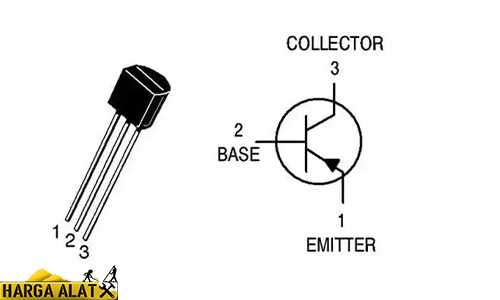
In this section, we will explore the pin configurations and functions of the BC547 transistor, a versatile electronic component used in various applications. By understanding the different pins and their roles, you will be able to effectively use the BC547 transistor in your electronic circuits.
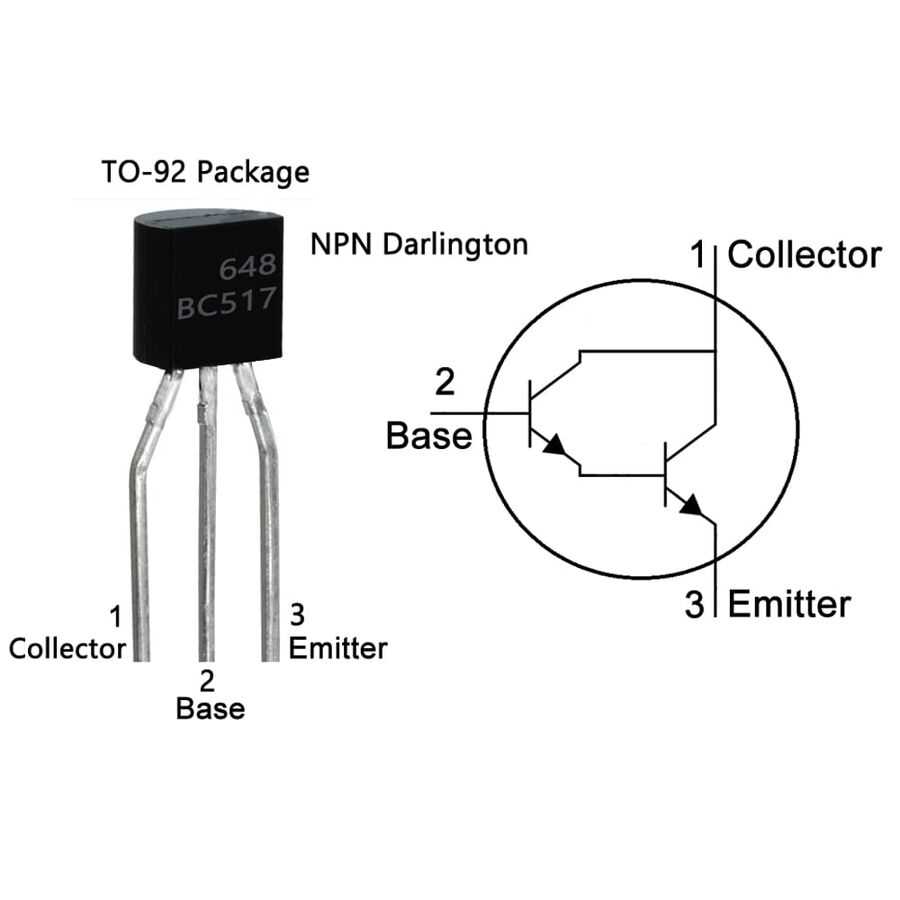
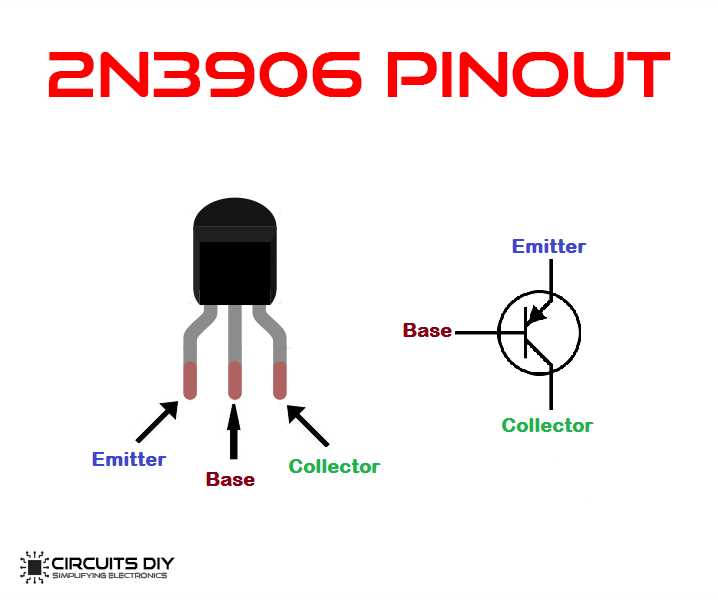
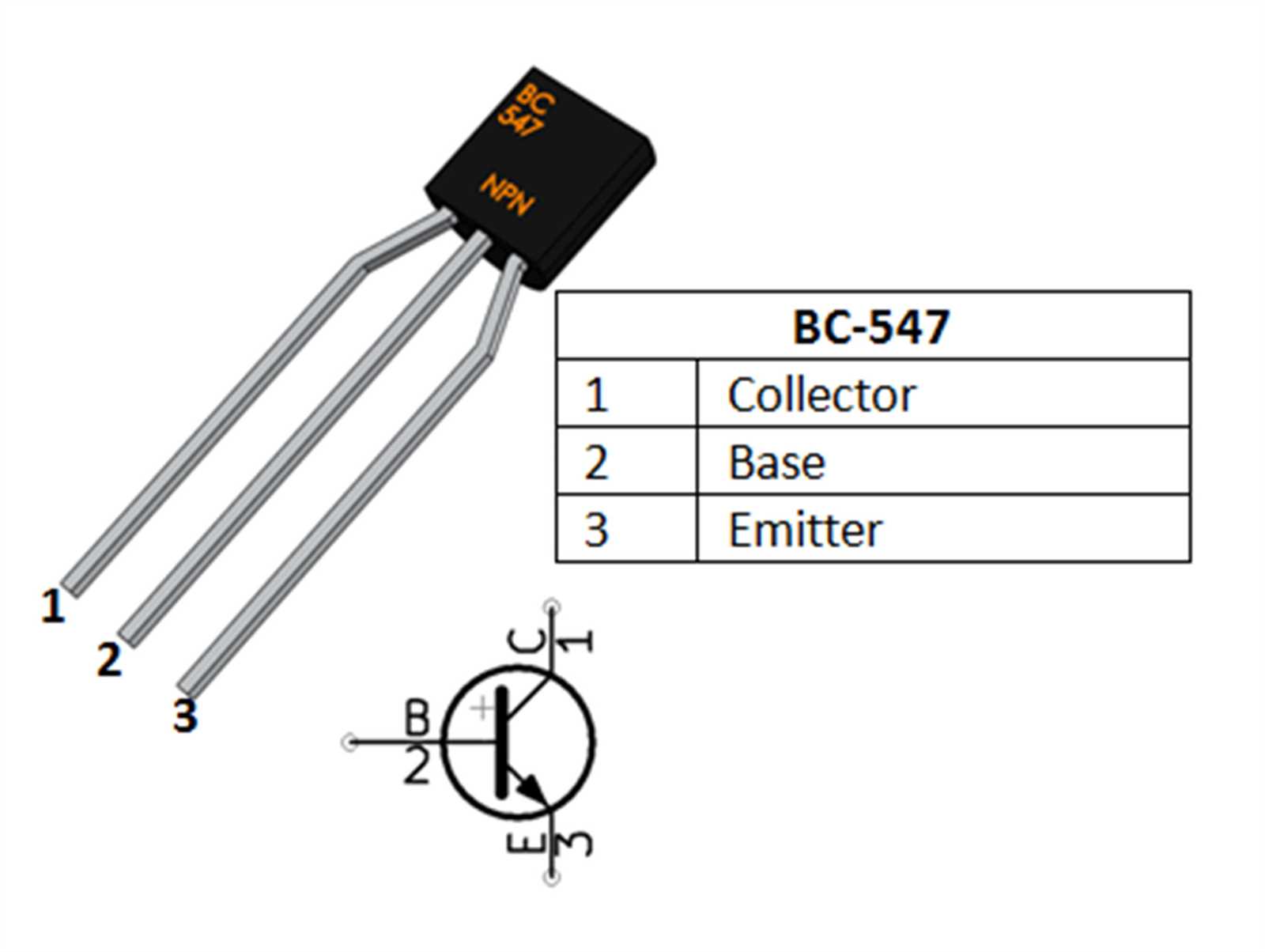
The BC547 transistor features three pins, which are commonly referred to as the collector, base, and emitter. Each of these pins plays a crucial role in the overall operation of the transistor.
- Collector: The collector pin, often denoted as C, is responsible for collecting the current flowing through the transistor. It is connected to the positive power supply in most applications.
- Base: The base pin, typically marked as B, controls the flow of current through the transistor. By applying a small current or voltage to the base, you can regulate the larger current flowing through the collector and emitter.
- Emitter: The emitter pin, denoted as E, allows the current to flow out of the transistor. It is usually connected to the ground or negative power supply.
The BC547 transistor operates on the principle of current amplification, where a small input current at the base controls a larger output current at the collector and emitter. This property makes it ideal for use in amplification, switching, and signal processing circuits.
It’s important to note that the pin configurations and functions of the BC547 transistor may vary depending on the manufacturer and specific datasheet. Therefore, it is always recommended to consult the datasheet provided by the manufacturer for accurate and detailed information.
In conclusion, understanding the pin configurations and functions of the BC547 transistor allows you to harness its capabilities effectively. By knowing how each pin contributes to the overall operation, you can design and implement circuits that leverage the transistor’s amplification and switching properties.
Applications and Implementation Examples of the BC547 Transistor

In this section, we will explore various applications and implementation examples of the versatile BC547 transistor, a widely used component in electronic circuits. By understanding its capabilities and potential, we can unlock its full potential in a range of projects and designs.
Amplification Circuit
One of the primary applications of the BC547 transistor is in amplification circuits. Due to its low noise and high gain characteristics, it is commonly used as a preamplifier for audio signals. By carefully configuring the circuit, the BC547 can effectively amplify weak signals, providing a clean and amplified output signal for further processing.
Switching Circuit

The BC547 transistor also finds extensive use in switching circuits. With its ability to handle moderate currents, it can be used to control the flow of larger currents and voltages. By connecting the BC547 as a switch, it can facilitate the automation of various processes in electronic systems. It can be incorporated into timer circuits, logic gates, and control systems, allowing for precise control of devices and appliances.
In addition to the amplifier and switching applications mentioned above, the BC547 transistor can also be used in various other implementations such as:
- Temperature and light sensing circuits
- Voltage regulation circuits
- Oscillator circuits
- Signal modulation circuits
- Motor control circuits
The BC547’s small size, low cost, and wide availability make it a popular choice for hobbyists, students, and professionals alike. Its versatility and reliability in various applications make it an essential component in the electronics industry.
In conclusion, the BC547 transistor serves as a key building block for a multitude of electronic circuits due to its amplification and switching capabilities. By acknowledging its potential and understanding its applications, engineers and enthusiasts can fully harness the power of this versatile component.